
Did you know that water leaks can account for up to 30% of water waste in urban areas? It’s essential to address this issue with effective leak detection techniques. Imagine using tools like acoustic detectors and infrared thermal imaging to pinpoint leaks swiftly and accurately. Smart water meters and pressure monitoring systems provide real-time insights, while non-invasive methods like dye testing and tracer gas techniques add to your arsenal. You might wonder which approach is best for your situation or how these technologies work. Let’s explore the intricacies of each method together.
Acoustic Leak Detection
Acoustic leak detection uses specialized sensors to identify sound waves generated by leaks in water pipes, allowing you to pinpoint the issue’s exact location. By deploying highly sensitive microphones and advanced signal-processing software, you can detect the acoustic signature of a leak, even in noisy environments. This method is invaluable in minimizing service disruptions and ensuring prompt repairs, effectively serving your community’s needs.
When applying acoustic leak detection, you’ll need to understand the pipe material and the surrounding environment, as these factors influence sound propagation. For instance, metal pipes transmit sound waves differently than PVC pipes. You’ll want to use ground microphones or listening sticks to capture these sounds accurately, ensuring your readings are reliable. Once identified, you can mark the leak’s location and proceed with targeted excavation, reducing unnecessary digging and property damage.
Infrared Thermal Imaging
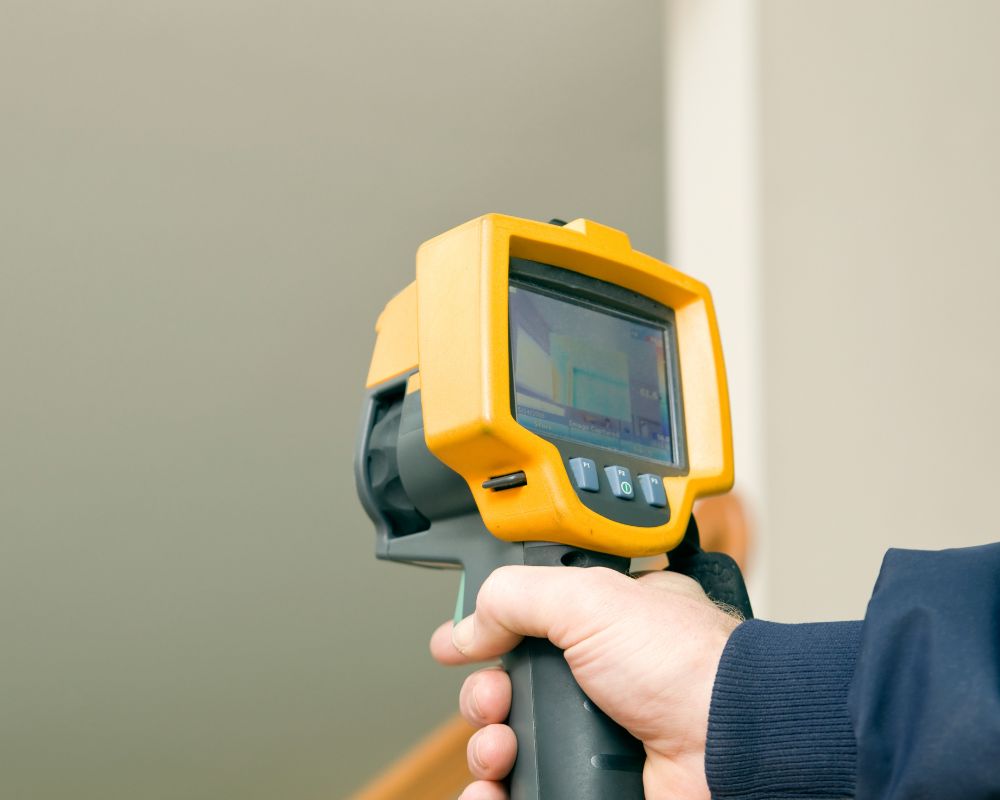
While acoustic techniques capture sound waves, infrared thermal imaging detects temperature variations along water pipes to locate leaks, providing an effective solution in situations where sound-based methods may fall short. An infrared camera can easily identify areas where water leaks alter the pipe’s temperature. This method excels in environments with complex pipe networks or where acoustic signals are dampened, such as insulated or underground pipes.
To implement infrared thermal imaging effectively, verify that your camera is calibrated to detect subtle thermal differences. Focus on scanning the entire pipeline length, paying attention to areas where the temperature deviates from the norm. You’ll find that leaks often appear as cooler spots due to evaporative cooling or warmer areas if hot water is involved.
Smart Water Meters
Smart water meters revolutionize leak detection by providing real-time data on water usage, enabling you to identify and address anomalies swiftly and efficiently. These meters employ advanced technologies such as ultrasonic or electromagnetic flow measurement to capture precise consumption data. Integrating with IoT platforms allows for seamless data transmission to centralized systems, enhancing your capability to monitor water distribution networks closely.
When abnormal usage patterns emerge, smart meters alert you instantly, allowing for proactive measures. You can analyze usage data to pinpoint leaks, reducing water loss and minimizing service disruptions. This technological advancement also empowers you to educate users about conservation, reinforcing a culture of responsibility and sustainability.
To maximize benefits, verify that the smart meter installation adheres to industry standards and that your infrastructure supports data-driven decision-making. Regular calibration and maintenance are vital to maintain accuracy and reliability. Also, data security must be a priority to protect sensitive information.
Pressure Monitoring Systems
Pressure monitoring systems play an important role in leak detection by continuously evaluating the pressure levels within water distribution networks. This enables swift identification and address of pressure anomalies that may indicate a leak. By integrating advanced sensors and real-time data analytics, these systems empower you to maintain system integrity and reduce water loss. You can deploy pressure transducers and gauges strategically, allowing for thorough surveillance over the entire network. This setup helps you compare actual pressure readings against expected values, quickly pinpointing any deviations.
Incorporating SCADA (Supervisory Control and Data Acquisition) systems enhances your ability to manage these anomalies efficiently. With SCADA, you’ll receive real-time alerts, allowing rapid response and minimizing water wastage. It’s vital to calibrate and maintain your sensors regularly to guarantee accurate readings. Pressure management and these systems can also help you optimize water delivery, reducing excess strain on the infrastructure.
Dye Testing Methods
Beyond pressure monitoring systems, employing dye testing methods offers another effective approach for identifying leaks in water distribution networks. By introducing non-toxic dyes into the water supply, you can efficiently pinpoint leakage locations with minimal disruption. This method is especially beneficial in complex plumbing systems where traditional methods might fall short.
To implement dye testing effectively, consider the following practical steps:
- Select Appropriate Dye: Use dyes that are visible under natural or UV light and are safe for potable water systems. Fluorescein and rhodamine are popular choices because of their vibrant visibility.
- Systematic Introduction: Inject the dye at strategic points within the network. This guarantees extensive coverage and maximizes the likelihood of detecting leaks, even in hard-to-access areas.
- Visual Inspection: Depending on the dye type, conduct thorough inspections using UV light or simply observe with the naked eye. Look for any seepage or discoloration near pipes, joints, and fittings.
Integrating dye testing methods into your leak detection toolkit enhances your ability to serve your community and promotes efficient water management. This proactive approach guarantees you address issues swiftly, minimizing water wastage and safeguarding valuable resources.
Ground Penetrating Radar
Ground-penetrating radar (GPR) offers a noninvasive solution for detecting subsurface water leaks by emitting electromagnetic waves into the ground and analyzing their reflections. GPR is particularly useful in pinpointing leaks without disrupting the surface, which is vital when working in urban environments or areas with sensitive landscapes. This technology employs high-frequency radio waves that penetrate various ground materials, such as soil, concrete, and asphalt, to reveal anomalies indicative of water presence.
When you operate a GPR system, you can assess the condition of underground utilities, including water pipes, by interpreting reflected signals. These reflections differ when they encounter materials with varying dielectric properties—like water versus soil—allowing you to identify potential leaks. Advanced GPR units can even provide three-dimensional images of subsurface conditions, enhancing your ability to locate leaks accurately.
Using GPR, you’ll minimize the need for excavation, reducing costs and environmental impact. It’s a proactive approach, allowing you to maintain service continuity while safeguarding community assets. Remember, though, that expertise in data interpretation is fundamental for getting precise results. Investing in GPR technology enhances your toolkit, enabling efficient and sustainable water management solutions for the communities you serve.
Ultrasonic Leak Detectors
While GPR offers a noninvasive method, ultrasonic leak detectors provide another effective tool. They use high-frequency sound waves to identify leaks in pressurized water systems. As a professional focused on serving your community, you’ll appreciate the precision and efficiency these detectors offer. Ultrasonic leak detectors detect the sound of water escaping through a pipe defect. The device amplifies these sounds, allowing you to pinpoint the leak’s location with remarkable accuracy.
By understanding the key benefits of ultrasonic leak detectors, you can enhance your service delivery:
- Accuracy: Ultrasonic detectors are adept at isolating the exact leakage point, reducing unnecessary excavation and repair costs.
- Efficiency: These devices allow you to quickly survey large areas or complex pipe networks, saving time and resources.
- Non-invasive: You can diagnose issues without disrupting the surrounding environment, preserving community assets and minimizing inconvenience.
Implementing ultrasonic leak detection in your toolkit increases your technical capabilities and aligns with your mission to serve others efficiently. Using advanced technology to address water loss contributes to sustainable water management and helps communities conserve valuable resources.
Tracer Gas Techniques
Tracer gas techniques offer a highly effective method for detecting water pipe leaks by introducing a non-toxic gas into the pipeline and monitoring its escape through defects. Using gases like hydrogen or helium, you can precisely pinpoint leaks. The tracer gas, being lighter than air, swiftly finds its way through even the tiniest cracks or holes in the pipes. As it escapes, sophisticated gas detectors sense its presence, providing reliable data on leak locations.
To implement this technique, verify the pipeline is first emptied of water. Next, introduce the tracer gas at a controlled pressure, systematically displacing any remaining air. It’s essential to maintain appropriate safety protocols throughout this process, as the gas must be handled with care despite being non-toxic. Gas detectors, often employing thermal conductivity or mass spectrometry, enable you to measure the gas concentration in the surrounding atmosphere, indicating the presence of leaks.
Your expertise in handling such techniques guarantees the rapid identification of problem areas, minimizing water loss and preventing potential damage. By employing tracer gas techniques, you’re not just detecting leaks; you’re safeguarding resources and enhancing the reliability of water supply systems for the community you serve.
Visual Inspection Tools
In addition to tracer gas techniques, you can enhance leak detection by employing visual inspection tools. These tools offer a straightforward approach to identifying visible signs of wear or damage in water pipes. They allow you to pinpoint issues that might compromise the integrity of your plumbing system. Using visual inspection tools, you can efficiently detect problems and prevent potential water loss, safeguarding resources for those you serve.
Consider utilizing these vital visual inspection tools:
- Flashlights and Headlamps: Illuminate dimly lit areas, ensuring you can spot corrosion, fractures, or leaks in hard-to-see places. A high-lumen flashlight can be essential for detailed examination.
- Borescopes and Inspection Cameras: These devices are inserted into pipes to capture real-time images and videos of interior surfaces. These tools help you assess internal conditions without invasive procedures, providing an inside look at potential issues.
- Magnifying Glasses and Mirrors: Use these aids to examine pipe joints and connections closely. They help you identify subtle cracks or wear that might not be visible to the naked eye.
Moisture Sensing Devices
Moisture sensing devices provide an efficient method for detecting hidden leaks, as they measure changes in humidity levels and alert you to potential water infiltration. By strategically placing these sensors in vulnerable areas, you can monitor humidity fluctuations and identify leaks before they cause extensive damage. These devices use hygrometric technology to detect moisture, offering real-time data that helps you respond swiftly to issues.
When selecting moisture sensing devices, consider their sensitivity and range. High-sensitivity sensors can detect minute changes in moisture levels, guaranteeing early leak detection. Devices with a wide range can cover larger areas, making them ideal for thorough monitoring in both residential and commercial settings. For peak performance, integrate these devices with a centralized control system, allowing you to receive alerts on mobile devices or computers.
Installation is straightforward; place sensors near plumbing fixtures, under sinks, or in basements, where leaks are more likely to occur. Regularly maintain and calibrate your devices to guarantee accuracy. By employing moisture sensing technology, you protect property and proactively address maintenance needs, ultimately serving others by preventing the costly and disruptive consequences of undetected water leaks.
Conclusion
You’ve got a wealth of tools at your disposal to tackle water pipe leaks efficiently. By combining techniques like acoustic detection and infrared imaging, you’re listening for leaks and seeing the unseen. Smart meters and pressure monitors are your vigilant sentinels, while tracer gases and moisture sensors are your secret weapons. Think of it as an orchestra of technology, each method playing its part to create a symphony of seamless water management and conservation.
Frequently Asked Questions
How Can Regular Maintenance Help Prevent Water Pipe Leaks?
Regular maintenance guarantees that joints, valves, and seals are inspected, identifying weak spots early. By replacing corroded components and tightening connections, you’ll prevent leaks, reduce water waste, and guarantee reliable service, ultimately enhancing customer satisfaction and operational efficiency.
What Are the Environmental Impacts of Undetected Water Leaks?
Imagine a leaky faucet as a silent thief in your home. Undetected water leaks waste resources, harm ecosystems, and increase utility costs. You can combat this by implementing real-time leak monitoring systems, ensuring sustainable water management.
How Do Weather Conditions Affect Leak Detection Accuracy?
Weather conditions can greatly impact leak detection accuracy. Rain or snow muffles acoustic signals, while temperature fluctuations cause pipe expansion or contraction. To overcome this, use advanced sensors and schedule inspections during stable weather for ideal results.
What Are the Cost Implications of Delayed Leak Repairs?
Imagine a small crack in a dam—left unchecked, it grows, flooding everything. Delaying leak repairs increases costs exponentially, from higher water bills to potential structural damage, demanding urgent, costly interventions. Prioritize timely action for community well-being.
How Can Homeowners Identify Early Signs of Potential Leaks?
Monitor water bills for sudden increases, listen for hissing sounds, check for damp spots or mold, and inspect water meter readings when all taps are off. Utilize thermal imaging cameras and moisture sensors for precise leak localization.